Introduction
How to Clean and Maintain Artificial Plants at Home is one of the most searched questions among homeowners who want their décor to stay fresh and beautiful all year round. While artificial plants require no watering, sunlight, or fertilizers, they do collect dust over time. The good news is that with just a few simple cleaning techniques, your artificial indoor plants can continue looking vibrant and realistic for years.
Whether you have an Artificial Areca Palm in your living room, a hanging ivy on your balcony, or a small desk plant in your office, this guide will show you the easiest ways to clean and maintain them without damaging their leaves or stems.
Why Cleaning Artificial Plants Matters
Artificial plants are loved because they’re maintenance-free, but “maintenance-free” doesn’t mean “never clean.”
Over time, dust, dirt, and indoor pollutants settle on the leaves, making even premium-quality artificial plants look dull.
Cleaning them regularly helps:
Keep decorative spaces looking fresh
Maintain their natural appearance
Improve your home’s overall aesthetics
Prevent dust buildup
Increase the lifespan of the plants
How Often Should You Clean Artificial Plants?
The ideal cleaning schedule depends on where they’re placed.
Indoor Living Room Plants
Clean every 3–4 weeks.
Bedroom Plants
Once every month is usually enough.
Kitchen Artificial Plants
Every 2 weeks, as grease and cooking residue can accumulate.
Balcony or Outdoor Artificial Plants
Clean every 2 weeks, especially during dusty or windy seasons.
Tools You’ll Need
Most homeowners already have these items:
- Microfiber cloth
- Soft paintbrush or makeup brush
- Feather duster
- Spray bottle
- Mild soap
- Lukewarm water
- Hair dryer (cool air setting)
- Clean towel
Step-by-Step Guide to Clean Artificial Plants
Step 1: Remove Loose Dust
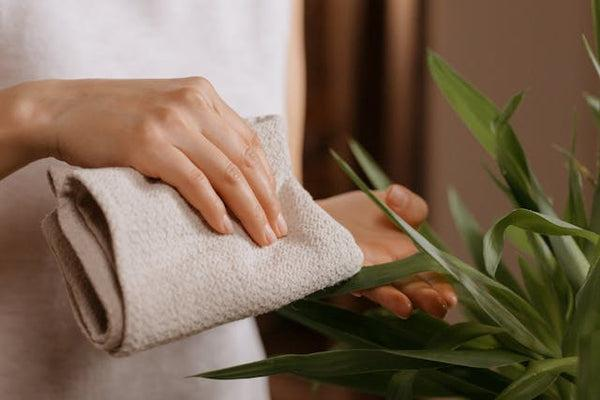
Use a microfiber cloth or feather duster to gently wipe each leaf.
For plants with many small leaves, use a soft brush to reach tight spaces.
Step 2: Blow Away Hidden Dust
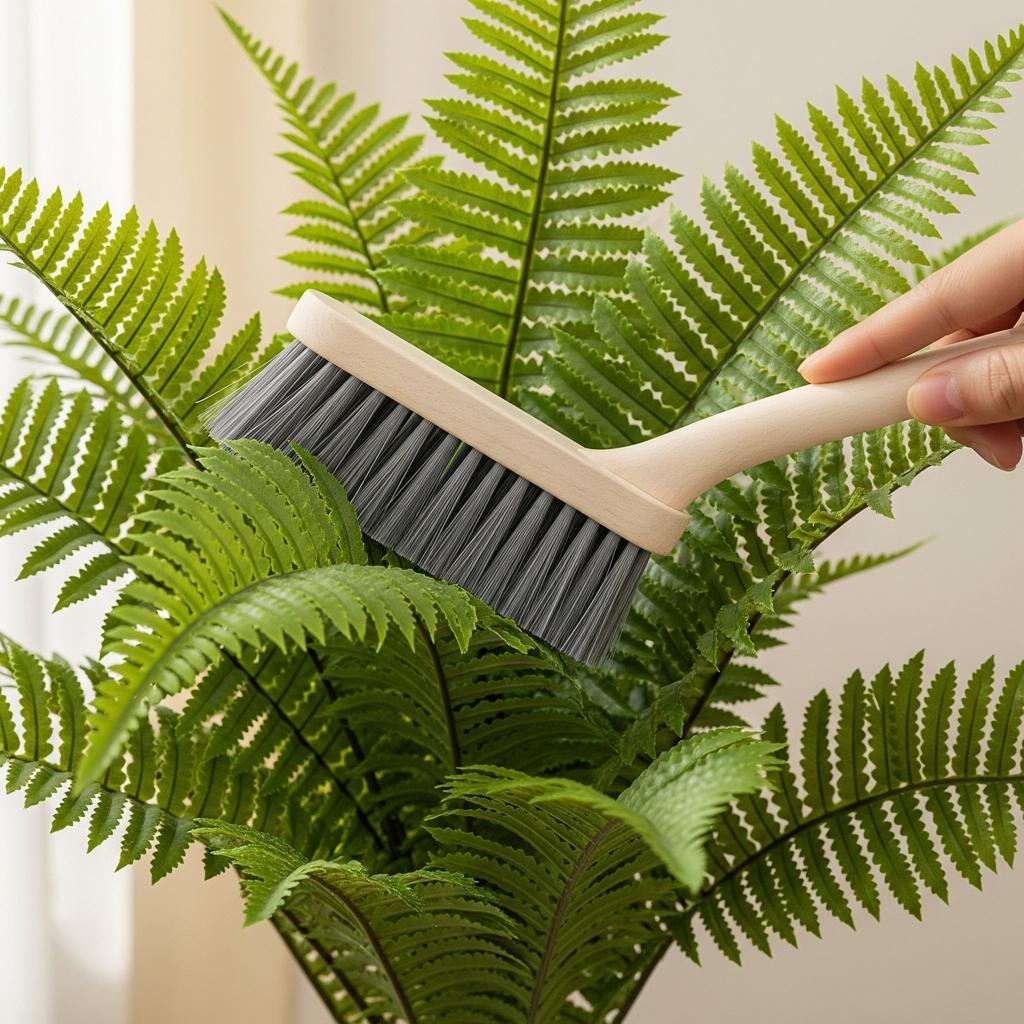
A hair dryer on the cool setting works well for removing dust trapped between leaves.
Never use hot air, as it may damage plastic or fabric foliage.
Step 3: Wipe Each Leaf
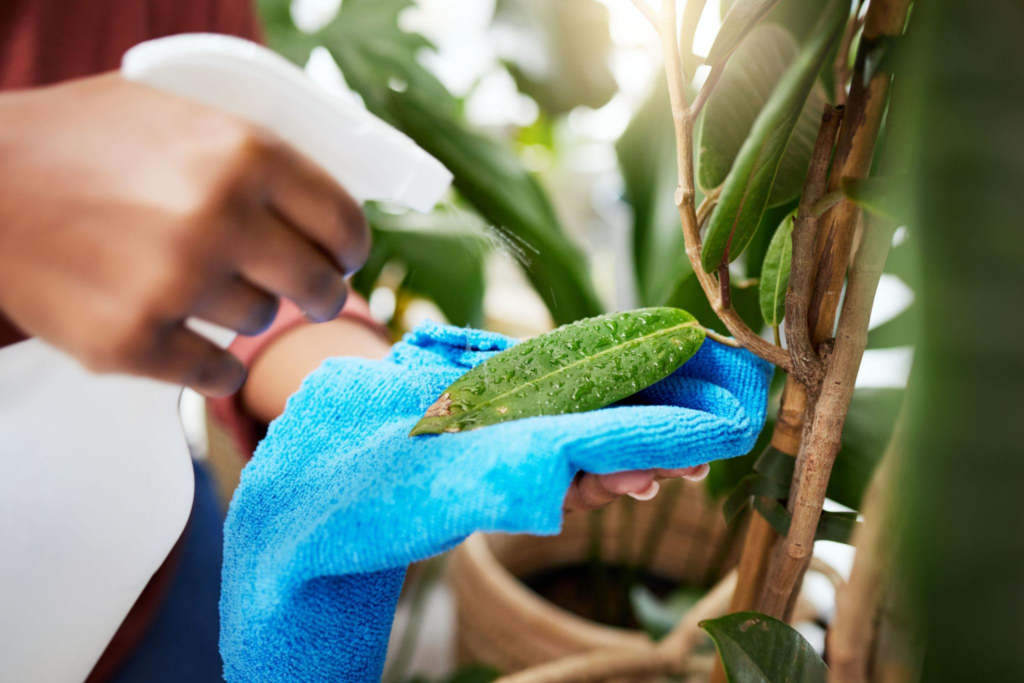
Mix a few drops of mild soap with lukewarm water.
Lightly dampen a microfiber cloth and gently wipe both sides of every leaf.
Avoid soaking the stems.
Step 4: Wash Plastic Artificial Plants (If Applicable)
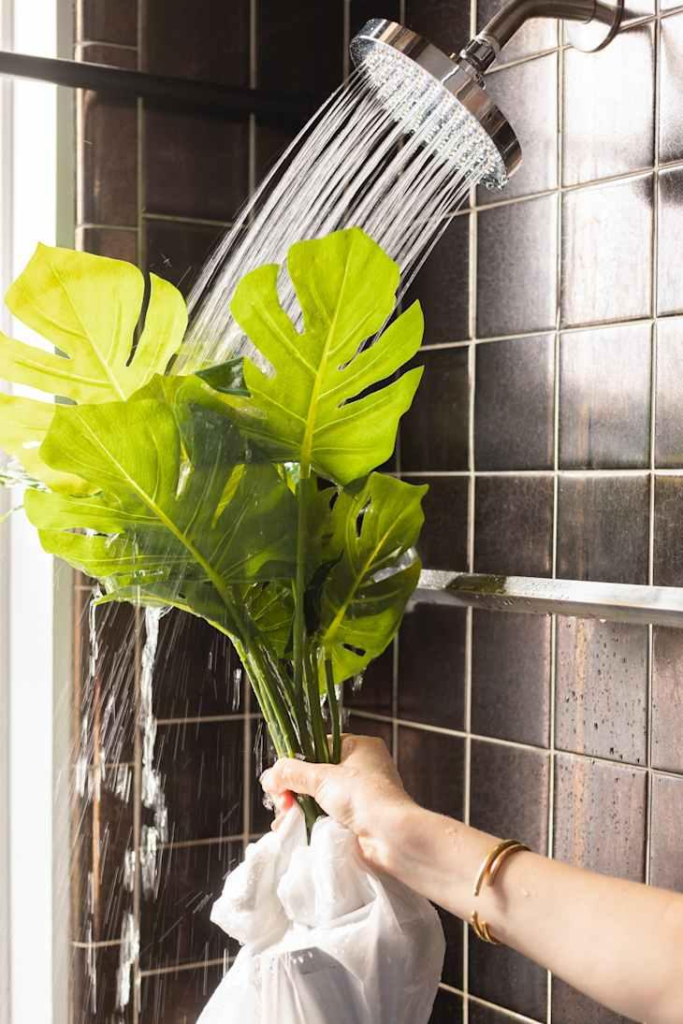
If your plant is made entirely of plastic:
- Rinse it under running water.
- Shake off excess water.
- Let it air dry completely before placing it back indoors.
Do not immerse plants with fabric leaves or electronic decorations.
Step 5: Dry Properly
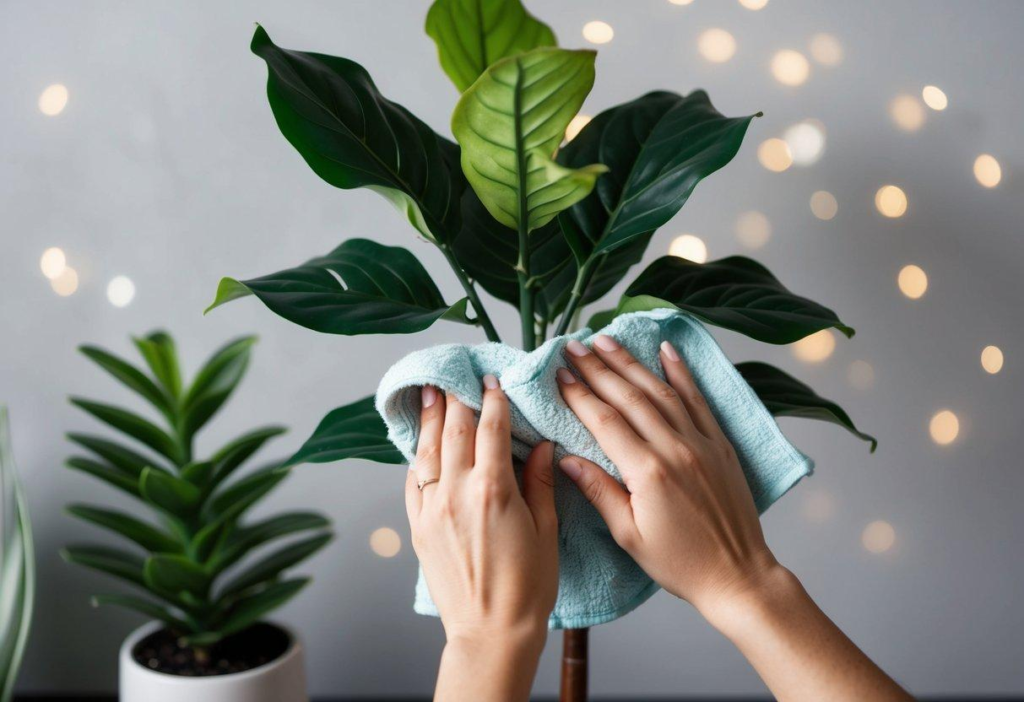
Use a clean towel to remove excess moisture and allow the plant to dry naturally in a shaded area.
Cleaning Methods for Different Types of Artificial Plants
Plastic Artificial Plants
These are the easiest to clean.
You can rinse them gently with water and wipe them dry.
Best Examples
- Artificial Snake Plant
- Artificial Succulents
- Artificial Rubber Plant
Fabric Artificial Plant
Use only a damp microfiber cloth or soft brush.
Avoid excessive water because fabric can lose its texture.
Artificial Hanging Plants
Remove them from hooks before cleaning.
Clean each vine individually and allow them to dry completely before rehanging.
Artificial Trees
Clean from the top down.
Use a microfiber cloth for larger leaves and a brush for dense branches.
Examples include:
- Artificial Areca Palm
- Artificial Fiddle Leaf Fig
- Artificial Bamboo Plant
Maintenance Tips to Keep Artificial Plants Looking New
Keep Them Away from Direct Sunlight
Continuous exposure to harsh sunlight may cause fading over time.
Rotate Plants Occasionally
Turning plants every few weeks helps them age evenly and prevents one side from collecting more dust.
Avoid Humid Corners
Excess moisture can affect the adhesive used in some premium artificial plants
Use Decorative Planters
Stylish pots not only improve appearance but also protect the base from scratches and wear.
Dust Regularly
A quick dusting every week takes only a minute and prevents heavy buildup.
Common Mistakes to Avoid
Using hot air from a hair dryer
Using harsh chemical cleaners
Scrubbing leaves too aggressively
Washing fabric plants with excessive water
Drying plants in direct sunlight
Ignoring dust for several months
Conclusion
Artificial plants are one of the easiest ways to bring greenery into your home without worrying about watering or maintenance. However, regular cleaning ensures they continue looking realistic and beautiful for years.
With just a microfiber cloth, a little mild soap, and a few minutes every month, your artificial indoor plants can remain as attractive as the day you bought them. Whether it’s a statement Areca Palm in your living room or a compact desk plant in your office, proper care keeps every space looking fresh, stylish, and inviting.
Use a microfiber cloth, soft brush, or cool air blower. Avoid abrasive cleaners and excessive water.
Yes, plastic artificial plants can usually be rinsed gently with water. Fabric varieties should only be wiped with a damp cloth.
Most indoor artificial plants should be cleaned every three to four weeks, while kitchen and balcony plants may need more frequent cleaning.
A microfiber cloth, feather duster, or hair dryer on the cool setting works best for removing dust.